
...
Skip to content

ashtonmanual

How Long Do Benzodiazepines Stay In Your System?

How Long Do Benzodiazepines Stay In Your System?

Benzodiazepines are among the most commonly prescribed medications for managing anxiety, panic disorders, sleep-related concerns, and other neurological conditions. While these medications can be effective when used under professional supervision, many individuals eventually begin asking an important question: how long do benzodiazepines stay in your system? Whether someone is taking a benzodiazepine as prescribed or considering a physician-guided tapering plan,… Read More »How Long Do Benzodiazepines Stay In Your System?

Does Xanax Cause Dementia and Memory Loss?

Does Xanax Cause Dementia and Memory Loss?

Many people who have taken Xanax (alprazolam) for months or years eventually ask a hard question: is this medication affecting my memory, and could it lead to dementia? Searches like does Xanax cause dementia and memory loss, can Xanax lead to memory loss and dementia, and does Xanax increase the risk of memory problems reflect a real and reasonable concern,… Read More »Does Xanax Cause Dementia and Memory Loss?

Does the Ashton Method Work for Older Adults?

Does the Ashton Method Work for Older Adults?

The Ashton Method is the tapering approach set out in the Ashton Manual, written by the late Professor C. Heather Ashton of Newcastle University. Its elements are familiar to anyone researching benzodiazepine withdrawal: gradual stepwise dose reduction, crossover to a longer-acting benzodiazepine where appropriate, and a pace set by the patient’s response rather than by a calendar. A common and… Read More »Does the Ashton Method Work for Older Adults?

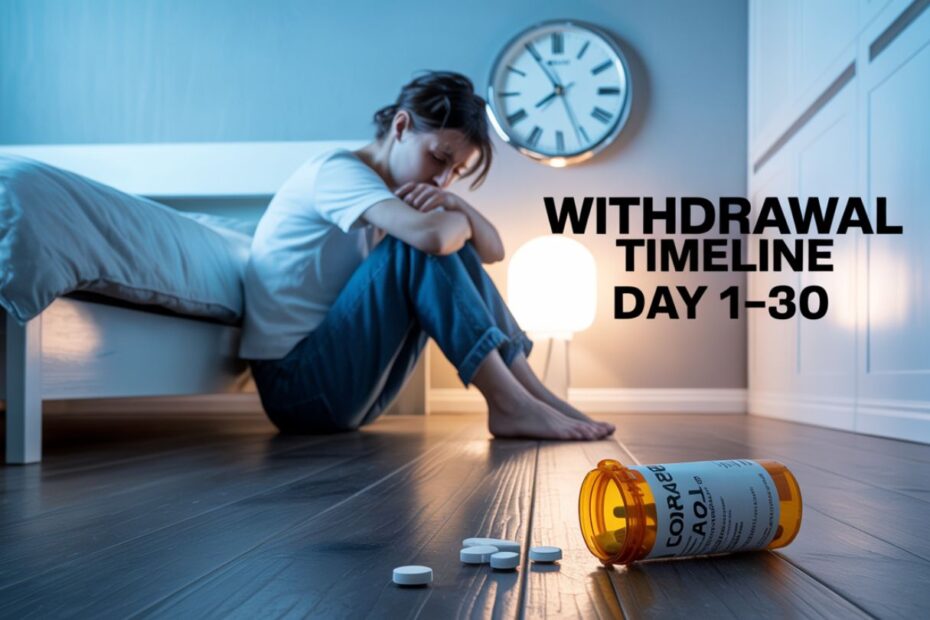
How Long Does Xanax Withdrawal Last? Symptoms, Timeline & Detox Treatment

How Long Does Xanax Withdrawal Last? Symptoms, Timeline & Detox Treatment

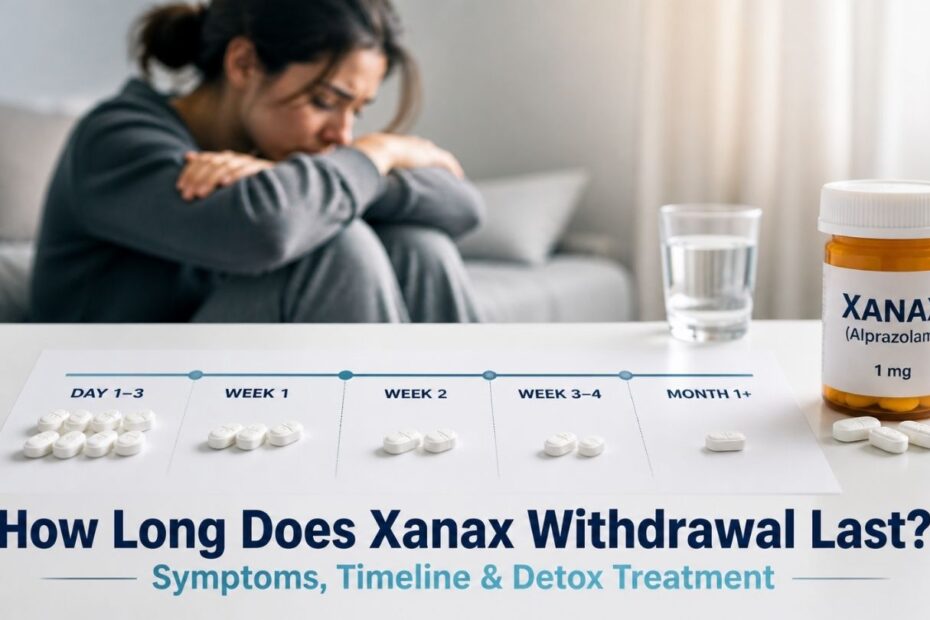
How long does Xanax withdrawal last? The honest answer has two parts. First, there is no fixed number of days: the duration depends on the dose, how long the medication was taken, the pace of reduction, and the individual nervous system. Second, much of the timeline is chosen rather than endured, because the safe way off a benzodiazepine is a… Read More »How Long Does Xanax Withdrawal Last? Symptoms, Timeline & Detox Treatment

Why Xanax Withdrawal Causes Insomnia

Why Xanax Withdrawal Causes Insomnia

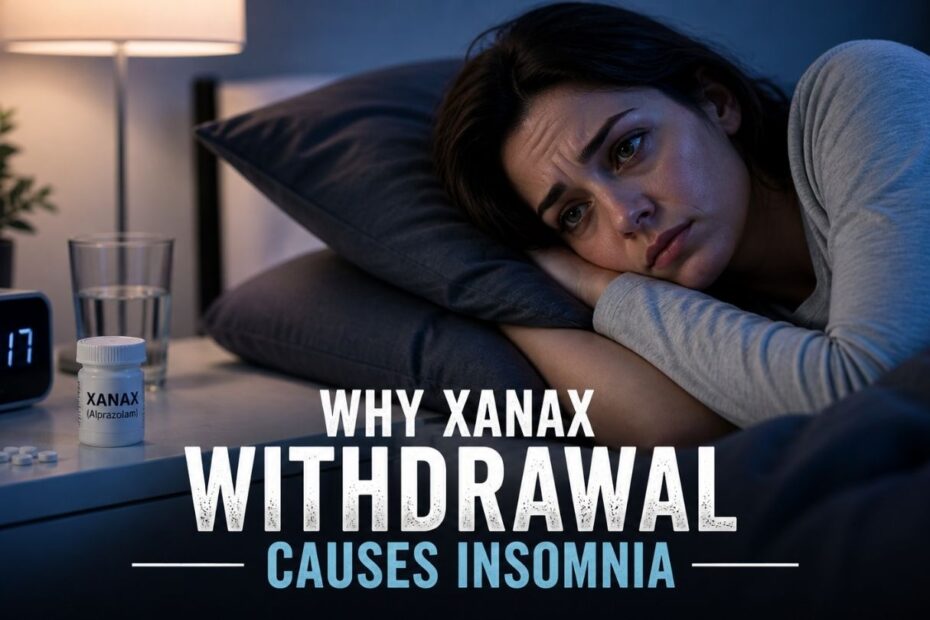
Insomnia during Xanax withdrawal is so common because the medication and sleep share the same machinery. Xanax (alprazolam) works by amplifying gamma-aminobutyric acid (GABA), the brain’s main calming neurotransmitter, and GABA is also what the brain uses to settle itself into sleep each night. After long-term use, the brain adapts to the medication’s constant presence, and when a taper begins,… Read More »Why Xanax Withdrawal Causes Insomnia

Xanax Withdrawal Anxiety: Why It Happens, How Long It Lasts, and How to Manage It Safely

Xanax Withdrawal Anxiety: Why It Happens, How Long It Lasts, and How to Manage It Safely

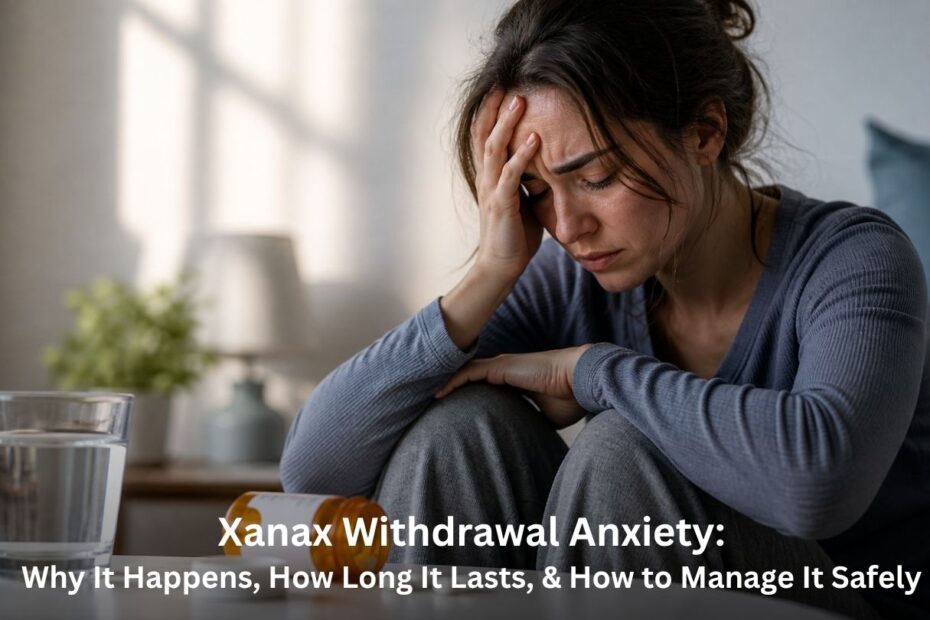
Anxiety is the most common symptom of Xanax withdrawal, and often the most discouraging one, because anxiety is usually the reason the medication was prescribed in the first place. When anxiety intensifies during a taper, it is easy to conclude that the original condition is returning or that something has gone badly wrong. Usually neither is true. Withdrawal anxiety is… Read More »Xanax Withdrawal Anxiety: Why It Happens, How Long It Lasts, and How to Manage It Safely

How Xanax to Valium Conversion Works in Practice

How Xanax to Valium Conversion Works in Practice

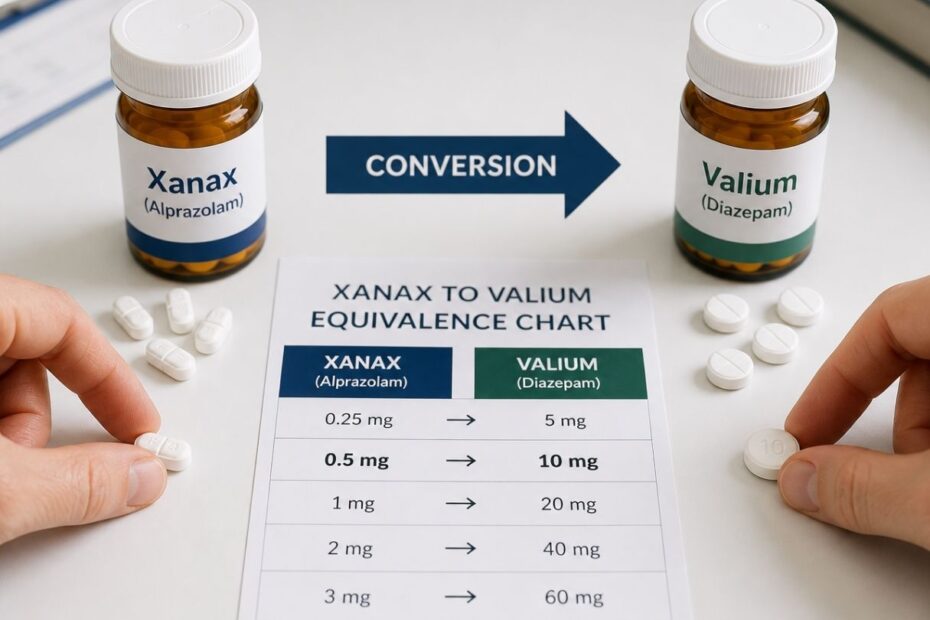
Xanax to Valium conversion is the stepwise replacement of alprazolam (Xanax) with diazepam (Valium) at the start of a benzodiazepine taper. The Ashton Manual describes this crossover as the preparation phase for people coming off short-acting benzodiazepines: the substitution happens first, in stages, and the taper itself, the gradual reduction of the total dose, begins after the crossover is complete.… Read More »How Xanax to Valium Conversion Works in Practice

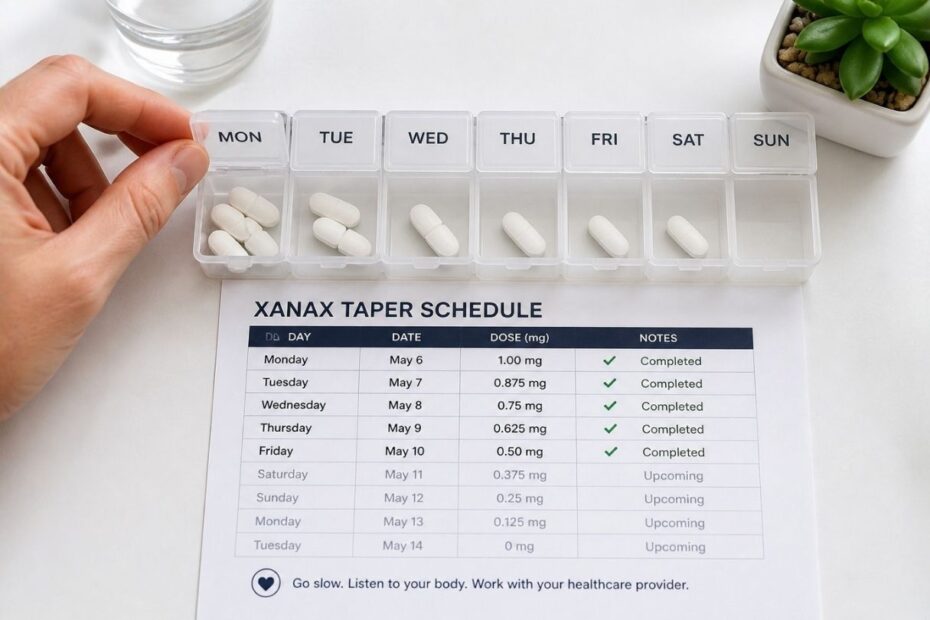
How To Safely Taper Off Xanax

How To Safely Taper Off Xanax

Xanax (alprazolam) is among the hardest benzodiazepines to stop, and the reason is built into the drug itself. It is potent, and it is short-acting: its blood level rises and falls quickly, so the nervous system swings between medicated and unmedicated states several times a day. Coming off it safely means a gradual, physician-supervised taper, never an abrupt stop. This… Read More »How To Safely Taper Off Xanax

How to Safely Begin a High-Dose Benzodiazepine Taper

How to Safely Begin a High-Dose Benzodiazepine Taper

A high-dose benzodiazepine taper calls for more care, not more speed. The higher the dose and the longer it has been taken, the more deeply the nervous system has adapted to the medication, and the more gradually that adaptation has to be unwound. Stopping abruptly from a high dose is genuinely dangerous: the risks include seizures, and a rushed reduction… Read More »How to Safely Begin a High-Dose Benzodiazepine Taper

Patient Reviewing Benzodiazepine Taper Schedule

How to Start a Gradual Benzodiazepine Taper: A Step-by-Step Guide

A gradual benzodiazepine taper is the slow, stepwise reduction of a benzodiazepine dose under the supervision of a prescribing physician. It is the standard way to stop these medications, because the brain adapts to their presence over months or years of use and needs time to readjust as the dose comes down. Abrupt discontinuation (cold turkey) should never be attempted:… Read More »How to Start a Gradual Benzodiazepine Taper: A Step-by-Step Guide

Doctor Consulting Patient About Appointment Preparation

Benzodiazepine Tapering via Telemedicine: What Patients Need to Know

Benzodiazepine tapering via telemedicine means working with a prescribing physician through scheduled video visits to reduce a benzodiazepine dose gradually over time. For people who became physically dependent on a medication taken exactly as prescribed, remote care can remove real obstacles: travel, time away from work, and the difficulty of finding a taper-literate physician nearby. During withdrawal, when sound and… Read More »Benzodiazepine Tapering via Telemedicine: What Patients Need to Know

Patient Following Benzodiazepine Taper Schedule

Benzodiazepine Tapering: A Complete Beginner’s Guide

Benzodiazepine tapering is the gradual, stepwise reduction of a benzodiazepine dose over time, and it is the safe way to come off these medications after regular use. With steady use, the brain adapts to the drug’s presence; that adaptation is physical dependence, a predictable medical condition, not addiction, and it can develop even when the medication was taken exactly as… Read More »Benzodiazepine Tapering: A Complete Beginner’s Guide

Benzodiazepine Physical Dependence

What Is Benzodiazepine Physical Dependence?

Benzodiazepine physical dependence is the body’s predictable adaptation to a benzodiazepine taken regularly over time. The brain adjusts its own chemistry to account for the medication’s constant presence, and once that adjustment has happened, the nervous system relies on the drug to keep its balance. Dependence develops quietly, often within weeks to months of regular use, and it happens to… Read More »What Is Benzodiazepine Physical Dependence?

Patient Reviewing Benzodiazepine Taper Schedule

Benzodiazepine Dependence Treatment: What Are Your Options and Which Works Best?

Treatment for benzodiazepine dependence begins with an accurate understanding of the condition itself. Most people who develop dependence took their medication exactly as prescribed. With regular use, the brain adapts to the drug, and that adaptation, physical dependence, is a predictable medical condition, not addiction. The treatment has to match the condition. The options commonly presented to people in this… Read More »Benzodiazepine Dependence Treatment: What Are Your Options and Which Works Best?

Ativan Withdrawal Timeline And Safe Taper Expectations

Ativan Withdrawal: What to Expect, How Long It Lasts, and How to Taper Safely

Ativan withdrawal is what happens when a nervous system that has adapted to the medication has its dose reduced or stopped. Ativan (lorazepam) is one of the most widely prescribed benzodiazepines, and because it is relatively short acting, withdrawal symptoms can appear quickly after a reduction or a missed dose. Most people researching this topic took their medication exactly as… Read More »Ativan Withdrawal: What to Expect, How Long It Lasts, and How to Taper Safely

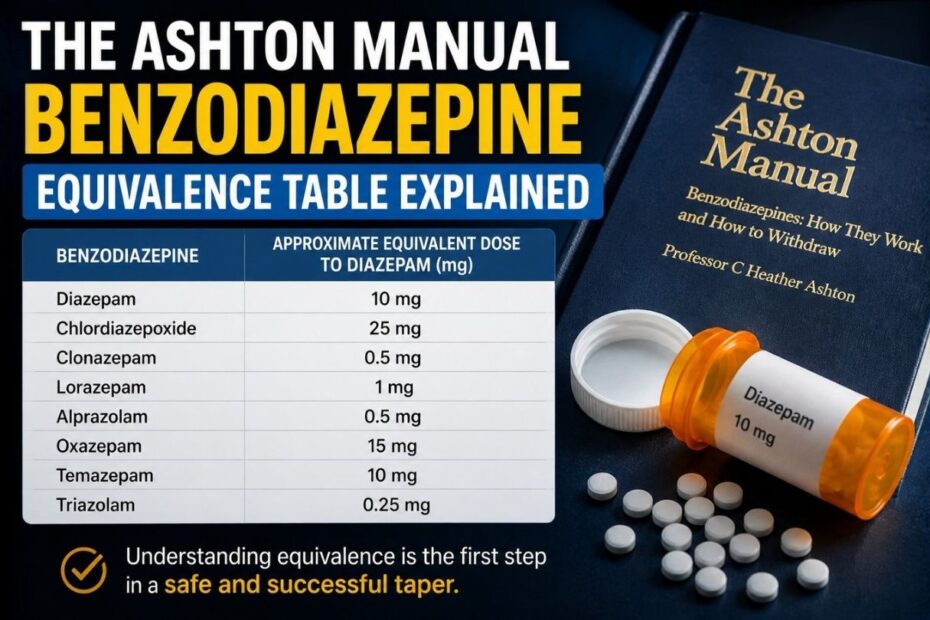
The Ashton Manual Benzodiazepine Equivalence Table Explained

The Ashton Manual Benzodiazepine Equivalence Table Explained

Planning benzodiazepine use, adjustment, or tapering can feel complex without the right guidance. This is where structured clinical frameworks become essential. One of the most widely referenced tools in this space is the Ashton Manual benzodiazepine equivalence table, a carefully developed guide that helps translate different benzodiazepines into comparable doses. By offering clarity on equivalence, this framework supports safe, structured,… Read More »The Ashton Manual Benzodiazepine Equivalence Table Explained

Diazepam Substitution Process And Benzodiazepine Taper Plan

How Diazepam Substitution Works

When it comes to managing a structured benzodiazepine taper, one approach that is widely recognized for its effectiveness is diazepam substitution. Many individuals exploring tapering options often ask how diazepam substitution works and why it is considered a preferred method in clinical practice. The answer lies in its ability to create a smoother, more controlled transition that aligns with a… Read More »How Diazepam Substitution Works

Clonazepam Taper Timeline And Benzodiazepine Withdrawal Schedule

How Long Does a Clonazepam Taper Take? Factors That Determine Your Timeline

When individuals begin considering a clonazepam taper, one of the most common questions that arises is: how long does a clonazepam taper take? The answer is not fixed, as every taper is different and shaped by several important factors. What remains consistent, however, is the importance of a gradual, well-structured approach that prioritizes stability, consistency, and long-term progress. A clonazepam… Read More »How Long Does a Clonazepam Taper Take? Factors That Determine Your Timeline

Safe Benzodiazepine Taper Schedule And Withdrawal Recovery Plan

How to Build a Slow Withdrawal Schedule for Benzodiazepines: A Step-by-Step Guide

Benzodiazepines are powerful medications that require careful management, especially when it comes time to reduce or discontinue their use. A structured and gradual approach is essential, which is why physicians who understand withdrawal recommend slow schedules. A thoughtfully designed plan supports stability, comfort, and long-term success, helping individuals transition safely under medical supervision. The concept of a slow benzodiazepine withdrawal… Read More »How to Build a Slow Withdrawal Schedule for Benzodiazepines: A Step-by-Step Guide

klonopin taper symptoms timeline and detox treatment: a complete guide

Klonopin Taper Symptoms Timeline and Detox Treatment: A Complete Guide

Klonopin withdrawal is best understood as a process the nervous system goes through while it relearns to calm itself without the medication. Klonopin, the brand name for clonazepam, is a potent, long-acting benzodiazepine, and both of those properties shape what tapering off it feels like in daily life: symptoms arrive on a delay, and the process rewards patience over speed.… Read More »Klonopin Taper Symptoms Timeline and Detox Treatment: A Complete Guide

Lorazepam Withdrawal Symptoms Timeline and Detox Treatment: Complete Guide

Lorazepam Withdrawal Symptoms Timeline and Detox Treatment: Complete Guide

Lorazepam withdrawal tends to announce itself quickly. Ativan, the brand name most people know it by, is a short-acting benzodiazepine, and when a dose is reduced or missed, the nervous system feels the change within hours rather than days. That speed shapes everything about how withdrawal unfolds and how a safe reduction should be planned. The starting point for making… Read More »Lorazepam Withdrawal Symptoms Timeline and Detox Treatment: Complete Guide

Alprazolam Withdrawal Symptoms Timeline and Detox Treatment: Complete Recovery Guide

Alprazolam Withdrawal Symptoms Timeline and Detox Treatment: Complete Recovery Guide

Alprazolam withdrawal has a reputation as one of the hardest benzodiazepine withdrawals, and the reputation is grounded in pharmacology. Alprazolam, best known by the brand name Xanax, is potent and short-acting: it hits fast, wears off fast, and leaves the nervous system swinging between doses. When the dose drops, the same speed works against the person taking it. None of… Read More »Alprazolam Withdrawal Symptoms Timeline and Detox Treatment: Complete Recovery Guide

Clonazepam Withdrawal Symptoms Timeline and Detox Treatment: A Complete Guide

Clonazepam Withdrawal Symptoms Timeline and Detox Treatment: A Complete Guide

Clonazepam withdrawal follows its own rhythm, set largely by the drug’s long half-life. Symptoms arrive later than most people expect, which regularly convinces someone that they have escaped withdrawal, right before it begins. Understanding that delay, what the symptoms are, and how a safe reduction works removes most of the surprises. One point of orientation first: physical dependence on clonazepam… Read More »Clonazepam Withdrawal Symptoms Timeline and Detox Treatment: A Complete Guide

Substitute for Xanax: What You Need to Know

Substitute for Xanax: What You Need to Know

People search for a substitute for Xanax for understandable reasons: worry about dependence, tolerance that keeps building, or side effects that have become hard to live with. The honest starting point is that no medication swaps in for Xanax (alprazolam) the way the phrase “substitute” suggests. Anything that calms the brain the same way carries the same dependence mechanism, and… Read More »Substitute for Xanax: What You Need to Know

Benzodiazepine Withdrawal Symptoms Timeline and Treatment Options: A Complete Guide

Benzodiazepine Withdrawal Symptoms Timeline and Treatment Options: A Complete Guide

Benzodiazepine withdrawal is what happens when a nervous system that has adapted to a benzodiazepine has the medication reduced or removed. It can affect anyone who has taken these medications regularly for more than a few weeks, including, and especially, people who took them exactly as prescribed. Physical dependence is a predictable adaptation of the brain, not addiction, and understanding… Read More »Benzodiazepine Withdrawal Symptoms Timeline and Treatment Options: A Complete Guide

Person sitting alone in muted gray tones staring blankly, symbolizing emotional numbness and loss of pleasure during benzo...

Anhedonia in Benzo Withdrawal: Loss of Pleasure and Emotional Numbness Explained

<?xml encoding=”UTF-8″> Anhedonia is a condition characterized by a diminished ability to experience pleasure or interest in activities that were once enjoyable. This phenomenon can be particularly pronounced during benzodiazepine withdrawal, a process that can be both physically and psychologically challenging. Benzodiazepines are commonly prescribed medications used to treat anxiety, insomnia, and other conditions. However, their discontinuation can lead to… Read More »Anhedonia in Benzo Withdrawal: Loss of Pleasure and Emotional Numbness Explained

Brain wave patterns comparing normal sleep cycles with benzodiazepine-affected sleep stages showing disrupted REM and deep...

Sleep Architecture Disruption: How Benzodiazepines Alter Natural Sleep Cycles

<?xml encoding=”UTF-8″> Sleep architecture refers to the structure and pattern of sleep cycles that occur throughout the night. It encompasses the various stages of sleep, including light sleep, deep sleep, and REM (rapid eye movement) sleep. Each stage plays a crucial role in overall health and well-being, contributing to physical restoration, cognitive function, and emotional regulation. Disruption of this architecture… Read More »Sleep Architecture Disruption: How Benzodiazepines Alter Natural Sleep Cycles

Person holding ear in discomfort while experiencing tinnitus and auditory symptoms during benzodiazepine withdrawal treatment

Tinnitus and Auditory Disturbances: Ear Ringing During Benzodiazepine Cessation

<?xml encoding=”UTF-8″> Tinnitus is a condition characterized by the perception of sound when no external sound is present. Individuals may experience ringing, buzzing, hissing, or other noises in their ears. This phenomenon can be temporary or chronic, affecting daily life and overall well-being. Auditory disturbances can manifest in various ways, including difficulty hearing external sounds or experiencing heightened sensitivity to… Read More »Tinnitus and Auditory Disturbances: Ear Ringing During Benzodiazepine Cessation

Person resting peacefully during benzodiazepine taper stabilization period, symbolizing patience and healing between dose ...

Holding Periods Between Cuts: Stabilization During Benzo Tapers

<?xml encoding=”UTF-8″> Holding periods represent a fundamental component of benzodiazepine discontinuation protocols. Benzodiazepines are psychoactive medications commonly prescribed for anxiety disorders, insomnia, seizure disorders, and muscle spasticity. A holding period is defined as the duration during which a patient maintains a constant dosage level before implementing the next dose reduction in their tapering schedule. The primary function of holding periods… Read More »Holding Periods Between Cuts: Stabilization During Benzo Tapers

Person experiencing anxiety and intrusive thoughts while reducing benzodiazepine medication, illustrating psychological sy...

Intrusive Thoughts and OCD: Psychological Symptoms During Benzodiazepine Reduction

<?xml encoding=”UTF-8″> Intrusive thoughts are unwanted and often distressing ideas or images that can pop into a person’s mind unexpectedly. These thoughts can be disturbing and may provoke feelings of anxiety, guilt, or shame. They often seem to contradict a person’s values or beliefs, leading to confusion and distress. While everyone experiences intrusive thoughts from time to time, they can… Read More »Intrusive Thoughts and OCD: Psychological Symptoms During Benzodiazepine Reduction

Patient looking distressed while doctor dismisses concerns during medical consultation about benzodiazepine withdrawal sym...

Medical Gaslighting: When Doctors Dismiss Benzodiazepine Withdrawal Complaints

<?xml encoding=”UTF-8″> Benzodiazepines are a class of medications commonly prescribed for anxiety, insomnia, and other related conditions. They work by enhancing the effects of a neurotransmitter called gamma-aminobutyric acid (GABA), which helps to calm the brain and nervous system. While these medications can be effective in the short term, they also carry the risk of dependence and withdrawal symptoms when… Read More »Medical Gaslighting: When Doctors Dismiss Benzodiazepine Withdrawal Complaints

Person experiencing dizziness and vertigo while holding their head, illustrating vestibular symptoms during benzodiazepine...

Vestibular Symptoms: Dizziness, Vertigo, and Balance Issues with Benzo Withdrawal

<?xml encoding=”UTF-8″> Vestibular symptoms encompass a collection of sensations and disorders affecting balance and spatial orientation. The vestibular system, housed within the inner ear, is responsible for maintaining equilibrium and coordinating movement. Dysfunction of this system produces symptoms including dizziness, vertigo, and balance disturbances that can substantially interfere with daily activities. The vestibular system functions as part of an integrated… Read More »Vestibular Symptoms: Dizziness, Vertigo, and Balance Issues with Benzo Withdrawal

Comparison chart showing Xanax XR extended-release and immediate-release tablets with half-life timelines for medication t...

Xanax XR Vs Immediate Release: Half-Life Differences in Tapering Strategy

<?xml encoding=”UTF-8″> Xanax (alprazolam) is a benzodiazepine medication prescribed for anxiety and panic disorders. It functions by enhancing gamma-aminobutyric acid (GABA), a neurotransmitter that produces calming effects in the central nervous system. The medication is manufactured in two formulations: immediate-release tablets and extended-release (XR) tablets. Immediate-release Xanax delivers the full dose rapidly, typically reaching peak plasma concentrations within 1-2 hours… Read More »Xanax XR Vs Immediate Release: Half-Life Differences in Tapering Strategy

Brain neurons forming new connections during recovery from benzodiazepine use, illustrating neuroplasticity and healing pa...

Neuroplasticity and Healing: Brain Adaptation Following Long-Term Benzo Use

<?xml encoding=”UTF-8″> Neuroplasticity refers to the brain’s remarkable ability to reorganize itself by forming new neural connections throughout life. This adaptability allows the brain to adjust its activities in response to new experiences, learning, and even injury. Neuroplasticity is not limited to childhood; it continues into adulthood, enabling individuals to acquire new skills, recover from trauma, and adapt to changing… Read More »Neuroplasticity and Healing: Brain Adaptation Following Long-Term Benzo Use

Person holding prescription benzodiazepine medication bottle while reading warning label about physical dependence and wit...

Therapeutic Dose Dependence: Developing Physical Reliance at Prescribed Benzos

<?xml encoding=”UTF-8″> Therapeutic dose dependence refers to the reliance that can develop when an individual regularly uses a medication, particularly those that affect the central nervous system. This phenomenon is often observed with benzodiazepines, which are commonly prescribed for anxiety, insomnia, and other related conditions. When a person takes these medications over an extended period, their body may adapt to… Read More »Therapeutic Dose Dependence: Developing Physical Reliance at Prescribed Benzos

Woman experiencing discomfort during menstrual cycle while managing benzodiazepine withdrawal symptoms, highlighting hormo...

Hormonal Fluctuations Impact: Menstrual Cycles Affecting Benzo Withdrawal Severity

<?xml encoding=”UTF-8″> The menstrual cycle is a recurring physiological process in individuals with ovaries, averaging 28 days in length but ranging from 21 to 35 days. The cycle consists of four distinct phases: menstruation (days 1-5), the follicular phase (days 1-13), ovulation (around day 14), and the luteal phase (days 15-28). Each phase involves fluctuations in reproductive hormones, primarily estrogen… Read More »Hormonal Fluctuations Impact: Menstrual Cycles Affecting Benzo Withdrawal Severity

Patient consulting with dentist about safe anesthesia options while tapering benzodiazepines in clinical setting

Dental Procedures During Benzo Tapering: Navigating Anesthesia and Sedation Safely

<?xml encoding=”UTF-8″> Benzodiazepines are a class of psychoactive medications frequently prescribed to treat anxiety disorders, insomnia, seizures, and muscle spasms. These drugs work by enhancing the activity of gamma-aminobutyric acid (GABA), a neurotransmitter that produces calming effects in the brain. While effective for short-term treatment, prolonged benzodiazepine use can result in physical dependence and tolerance, necessitating a carefully managed discontinuation… Read More »Dental Procedures During Benzo Tapering: Navigating Anesthesia and Sedation Safely

Prescription bottles of pregabalin and gabapentin with warning symbols, highlighting risks of anticonvulsant medications a...

Pregabalin and Gabapentin: Why Anticonvulsants Aren’T Safe Benzo Alternatives

<?xml encoding=”UTF-8″> Pregabalin and gabapentin prescriptions have increased significantly in recent years. Both medications were initially developed as anticonvulsants for epilepsy treatment and subsequently approved for neuropathic pain management. Clinical data demonstrates their efficacy in treating specific nerve pain conditions, leading to expanded therapeutic applications. Healthcare providers now prescribe these medications for various off-label conditions, including generalized anxiety disorder, fibromyalgia,… Read More »Pregabalin and Gabapentin: Why Anticonvulsants Aren’T Safe Benzo Alternatives

Person experiencing heightened anxiety and agitation while holding benzodiazepine medication bottle, illustrating paradoxi...

Paradoxical Reactions Explained: When Benzodiazepines Increase Anxiety Instead

<?xml encoding=”UTF-8″> Paradoxical reactions to benzodiazepines are unexpected responses that occur in some individuals when they take these medications. While benzodiazepines are commonly prescribed to alleviate anxiety, promote sleep, and manage seizures, a small percentage of users may experience heightened anxiety, agitation, or aggressive behavior instead of the intended calming effects. This phenomenon can be particularly concerning, as it contradicts… Read More »Paradoxical Reactions Explained: When Benzodiazepines Increase Anxiety Instead

Person experiencing severe withdrawal symptoms from abrupt benzodiazepine discontinuation, highlighting seizure risk and m...

Cold Turkey Seizure Risk: Medical Dangers of Abrupt Benzo Discontinuation

<?xml encoding=”UTF-8″> Benzodiazepines are a class of medications commonly prescribed for their sedative and anxiolytic properties. They are often used to treat conditions such as anxiety, insomnia, and seizures. These drugs work by enhancing the effects of a neurotransmitter called gamma-aminobutyric acid (GABA), which plays a crucial role in calming the brain’s activity. By increasing GABA’s inhibitory effects, benzodiazepines help… Read More »Cold Turkey Seizure Risk: Medical Dangers of Abrupt Benzo Discontinuation

Person holding pill bottle looking concerned as calendar pages flip by, illustrating diminishing benzodiazepine effectiven...

Functional Tolerance Development: When Therapeutic Benzo Effects Diminish Over Time

Functional tolerance is a phenomenon that occurs when the body becomes accustomed to a substance, leading to a diminished response over time. This is particularly relevant in the context of medications, where patients may find that the initial effects of a drug become less pronounced with continued use. Understanding functional tolerance is crucial for both patients and healthcare providers, as… Read More »Functional Tolerance Development: When Therapeutic Benzo Effects Diminish Over Time

Neuron synapse showing excessive glutamate neurotransmitter activity causing cellular stress during benzodiazepine withdrawal

Glutamate Excitotoxicity: Understanding Neurotransmitter Imbalance in Benzo Tapering

<?xml encoding=”UTF-8″> Glutamate excitotoxicity is a critical concept in understanding how certain neurological conditions can arise from an imbalance in neurotransmitter levels. Glutamate, the primary excitatory neurotransmitter in the brain, plays a vital role in synaptic transmission and plasticity. However, when glutamate levels become excessively high, it can lead to neuronal damage and cell death. This phenomenon is particularly relevant… Read More »Glutamate Excitotoxicity: Understanding Neurotransmitter Imbalance in Benzo Tapering

Updosing Regret: Reversing the Decision to Increase Your Medication During Benzo Tapering

Updosing Regret: Reversing the Decision to Increase Your Medication During Benzo Tapering

Benzodiazepine withdrawal presents documented physical and psychological symptoms that can significantly impact individuals during dose reduction. These symptoms may include anxiety, insomnia, muscle tension, cognitive difficulties, and in severe cases, seizures or other serious medical complications. The severity and duration of withdrawal symptoms vary based on factors such as the specific benzodiazepine used, dosage, duration of use, and individual physiology.… Read More »Updosing Regret: Reversing the Decision to Increase Your Medication During Benzo Tapering

Dry Cutting Pills: Splitting Tablets Accurately for Benzo Tapering

Dry Cutting Pills: Splitting Tablets Accurately for Benzo Tapering

<?xml encoding=”UTF-8″> Accurate pill splitting is a medication management technique used when patients require doses that differ from commercially available tablet strengths. This practice becomes necessary when prescribed dosages fall between standard tablet sizes or when dose adjustments are required for therapeutic reasons. Healthcare providers may recommend pill splitting when lower doses are needed but unavailable in pre-manufactured forms. The… Read More »Dry Cutting Pills: Splitting Tablets Accurately for Benzo Tapering

Polypharmacy Complications: Tapering Multiple CNS Depressants Simultaneously

Polypharmacy Complications: Tapering Multiple CNS Depressants Simultaneously

<?xml encoding=”UTF-8″> Polypharmacy is defined as the simultaneous use of multiple medications by a single patient, typically involving five or more prescription drugs. This phenomenon occurs most frequently in elderly populations managing multiple chronic medical conditions. Central Nervous System (CNS) depressants constitute a drug class that reduces neural activity in the brain, producing therapeutic effects including sedation, muscle relaxation, and… Read More »Polypharmacy Complications: Tapering Multiple CNS Depressants Simultaneously

Person's hand experiencing involuntary muscle tremors and twitching movements during benzodiazepine withdrawal symptoms

Muscle Fasciculations and Tremors: Neurological Manifestations During Benzo Cessation

Muscle fasciculations are brief, involuntary contractions of small muscle fiber groups that appear as visible twitching beneath the skin surface. These localized muscle movements typically last milliseconds to seconds and can occur in any skeletal muscle. While fasciculations are often benign and related to normal physiological processes, they may also indicate motor neuron dysfunction or other neurological disorders when persistent… Read More »Muscle Fasciculations and Tremors: Neurological Manifestations During Benzo Cessation

Pharmacist preparing customized liquid benzodiazepine medication with graduated measuring tools for precise tapering doses

Compounded Pharmacy Solutions: Custom Dosing for Gradual Benzodiazepine Reduction Plans

<?xml encoding=”UTF-8″> Compounded pharmacy solutions play a crucial role in modern healthcare by providing customized medications tailored to meet the specific needs of individual patients. Unlike mass-produced pharmaceuticals, compounded medications are created by pharmacists who combine, mix, or alter ingredients to formulate a drug that is unique to a patient’s requirements. This approach is particularly beneficial for patients who may… Read More »Compounded Pharmacy Solutions: Custom Dosing for Gradual Benzodiazepine Reduction Plans

Doctor Writing Prescription For Patient

Understanding the Ashton Protocol: A Compassionate Guide

Coming off benzodiazepines can feel like finding a way through dense fog. The path can seem uncertain, and the challenges along the way are very real. One method stands out for its clarity and its track record: the Ashton Protocol, a structured approach to tapering off these medications safely. This article explains where the protocol comes from, how it works,… Read More »Understanding the Ashton Protocol: A Compassionate Guide

White Tablets Spilled From Bottle

How to Taper Off Xanax

Deciding to reduce or stop taking Xanax (alprazolam) is a significant step. Many people start with the same question: how can the dose come down without severe withdrawal symptoms? The honest answer involves careful planning, patience, and the guidance of a physician. Stopping Xanax abruptly can be dangerous and can lead to significant withdrawal effects. A gradual reduction, known as… Read More »How to Taper Off Xanax

Person holding puzzle pieces representing cognitive recovery and brain healing after benzodiazepine withdrawal

Cognitive Impairment Recovery: Memory and Focus Restoration Post-Benzodiazepine Taper

Benzodiazepines are a class of medications commonly prescribed for anxiety, insomnia, and other related conditions. They work by enhancing the effects of a neurotransmitter called gamma-aminobutyric acid (GABA), which has a calming effect on the brain. While these medications can be effective in the short term, prolonged use can lead to cognitive impairment. Individuals may experience difficulties with memory, attention,… Read More »Cognitive Impairment Recovery: Memory and Focus Restoration Post-Benzodiazepine Taper