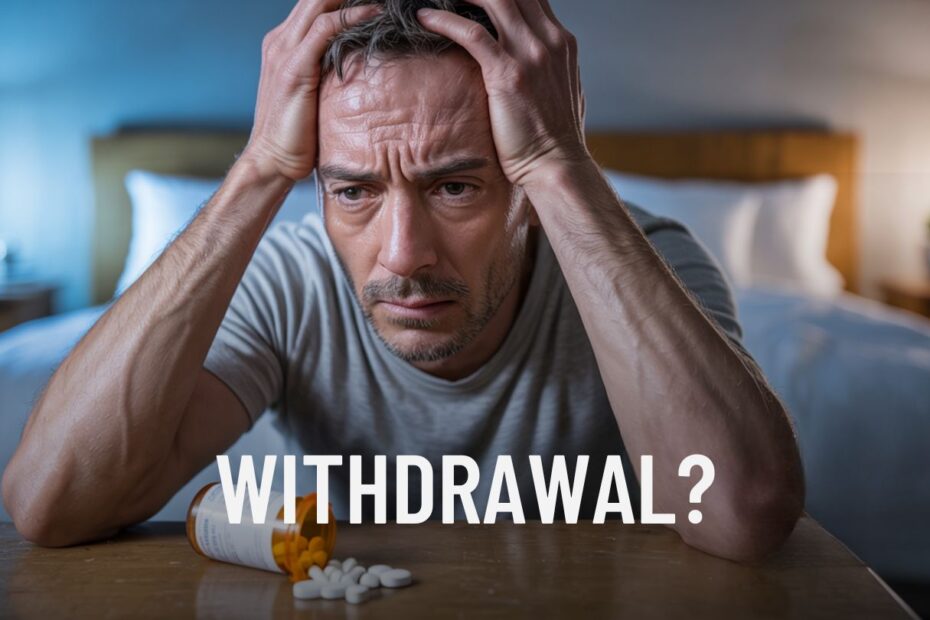
Benzodiazepine withdrawal is what happens when a nervous system that has adapted to a benzodiazepine has the medication reduced or removed. It can affect anyone who has taken these medications regularly for more than a few weeks, including, and especially, people who took them exactly as prescribed. Physical dependence is a predictable adaptation of the brain, not addiction, and understanding that distinction is the first step toward treating withdrawal properly.
This guide explains the common symptoms, how the timeline tends to unfold, and what evidence-based treatment actually looks like.
Key Takeaways
- Withdrawal symptoms reflect a nervous system rebalancing after long-term benzodiazepine use, not a new illness and not addiction.
- When symptoms begin depends largely on the half-life of the benzodiazepine; how long they last varies widely between individuals.
- Never stop a benzodiazepine abruptly. Cold turkey discontinuation can cause seizures and makes later withdrawal worse.
- The evidence-based treatment is a gradual, individually paced taper, as described in the Ashton Manual and the Maudsley Deprescribing Guidelines.
- Recovery typically moves in windows and waves, with good stretches and temporary setbacks that soften over time.
Understanding Benzodiazepine Withdrawal Symptoms
Benzodiazepines enhance the effect of gamma-aminobutyric acid (GABA), the brain’s main calming neurotransmitter. With regular use, the brain compensates by reducing the number and sensitivity of its GABA receptors. When the dose drops faster than those receptors can recover, the brain’s braking system is temporarily underpowered, and nearly every stress-regulation system can run hot as a result.
Types of Withdrawal Symptoms
Symptoms span several categories, and most people experience a shifting mix rather than all of them at once:
- Anxiety-type symptoms: heightened anxiety, panic waves, restlessness, and a keyed-up feeling that is often more intense than the original condition the medication was prescribed for.
- Sleep disruption: difficulty falling asleep, fragmented sleep, vivid dreams, and early waking.
- Physical symptoms: muscle tension and aches, tremors, sweating, heart palpitations, digestive upset, and headaches.
- Sensory and neurological symptoms: sound and light sensitivity, tinnitus, tingling or burning sensations, dizziness, and the distinctive perceptual changes many people describe during withdrawal.
- Cognitive and emotional symptoms: poor concentration, memory lapses, low mood, irritability, and feelings of unreality (depersonalization or derealization).
Two points help make sense of this list. First, symptoms can appear even while still taking the medication at a steady dose, as tolerance develops; this is called tolerance withdrawal. Second, withdrawal symptoms are information about the pace of reduction, not evidence of personal weakness or permanent damage.
Benzodiazepine Withdrawal Timeline and Phases

There is no single timeline that fits everyone, but withdrawal generally moves through recognizable phases:
Onset. How soon symptoms begin after a reduction depends mostly on how quickly the drug leaves the body. Short-acting benzodiazepines such as alprazolam and lorazepam can produce symptoms within hours to a day. Long-acting ones such as diazepam or clonazepam may not produce noticeable symptoms for several days.
Acute phase. The most intense period typically spans the first weeks after a significant reduction or discontinuation. Symptoms often fluctuate day to day and can feel alarming, which is itself part of the physiology: fear activates the same stress systems that withdrawal has already sensitized.
Protracted phase. For some people, symptoms persist at a lower intensity for months, occasionally longer. This protracted withdrawal is recognized in the 2020 United States Food and Drug Administration (FDA) benzodiazepine label update, which formally acknowledged that withdrawal reactions can be severe and prolonged. Protracted symptoms tend to improve in a windows-and-waves pattern: stretches of feeling clearly better, then temporary returns of symptoms that gradually become shorter and milder.
Factors That Influence Withdrawal Timeline
The variables that most affect intensity and duration are the dose and how long it was taken, the half-life of the specific benzodiazepine, the speed of the reduction (the single factor most within anyone’s control), any history of rapid tapers or cold turkey attempts (repeated abrupt withdrawals can sensitize the nervous system, a phenomenon called kindling), and individual biology.
Treatment Options for Benzodiazepine Withdrawal

The evidence-based treatment for benzodiazepine dependence is not a program or a facility stay. It is a gradual, medically supervised taper, matched to the individual’s response.
The foundational reference is the Ashton Manual, written by the late Professor C. Heather Ashton of Newcastle University. Its core elements are: switching from a short-acting benzodiazepine to long-acting diazepam where appropriate (the crossover), reducing in small steps, making the steps proportionally smaller as the dose gets lower, and letting the patient’s symptoms set the pace. The Maudsley Deprescribing Guidelines, published more recently by psychiatrists at King’s College London, support the same gradual, hyperbolic approach.
A few principles matter more than any schedule:
- Never stop abruptly. Cold turkey withdrawal from regular benzodiazepine use can cause seizures and dramatically worsens later withdrawal through kindling.
- Rapid fixed-timeline discontinuation conflicts with the way the nervous system recovers. Programs built around being substance-free within days or weeks answer an insurance calendar, not GABA-receptor biology. A person whose only condition is physical dependence on a prescribed medication needs a taper, not an addiction-treatment model.
- Holds are legitimate. Pausing at a dose while symptoms settle is protective, not failure.
- Supervision matters. A physician who understands withdrawal can distinguish it from relapse of the original condition, adjust the pace, and watch for the uncommon situations that need urgent care.
Alcohol deserves a specific warning: it acts on the same GABA receptors and should be avoided entirely during tapering and withdrawal.
Conclusion
Benzodiazepine withdrawal has a frightening reputation, and the symptoms are real. But the mechanism is a nervous system rebalancing, not a brain that is broken. With a gradual, patient-paced taper and proper medical supervision, the process becomes manageable, and the regulatory systems involved do recalibrate with time.
For a practical look at how gradual schedules are constructed, see How to Build a Slow Withdrawal Schedule for Benzodiazepines, or explore the benzodiazepine taper calculator to see the shape of a stepwise plan.
Frequently Asked Questions
What is benzodiazepine withdrawal?
It is the nervous system’s response to reducing or stopping a benzodiazepine after it has adapted to the medication. Because the brain has downregulated its own GABA calming system, symptoms such as anxiety, insomnia, sensory sensitivity, and muscle tension can appear until the system rebalances. It is a physiological process, and it is not evidence of addiction.
Can benzodiazepine withdrawal cause serious complications?
Abrupt discontinuation can, including seizures in some cases, which is why cold turkey withdrawal should never be attempted. A gradual, medically supervised taper avoids most serious risks. Sudden severe symptoms such as seizure activity or thoughts of self-harm always warrant immediate medical attention.
Is insomnia common during benzodiazepine withdrawal?
Yes, it is one of the most common symptoms. Benzodiazepines suppress the brain’s arousal systems, and during withdrawal those systems temporarily overshoot. Sleep typically improves gradually, often before other symptoms fully resolve, and improved sleep is usually an early sign of recovery.
What is protracted benzodiazepine withdrawal?
It refers to symptoms that persist for months after discontinuation, usually at lower intensity and in a windows-and-waves pattern. The 2020 FDA benzodiazepine label update formally recognized that withdrawal reactions can be prolonged. Protracted symptoms reflect a nervous system still recalibrating, and they continue to improve with time.